Database Indexing in Practice: Florida Laws & Statutes
Florida Legislature: Office of Legislative Services (OLS)
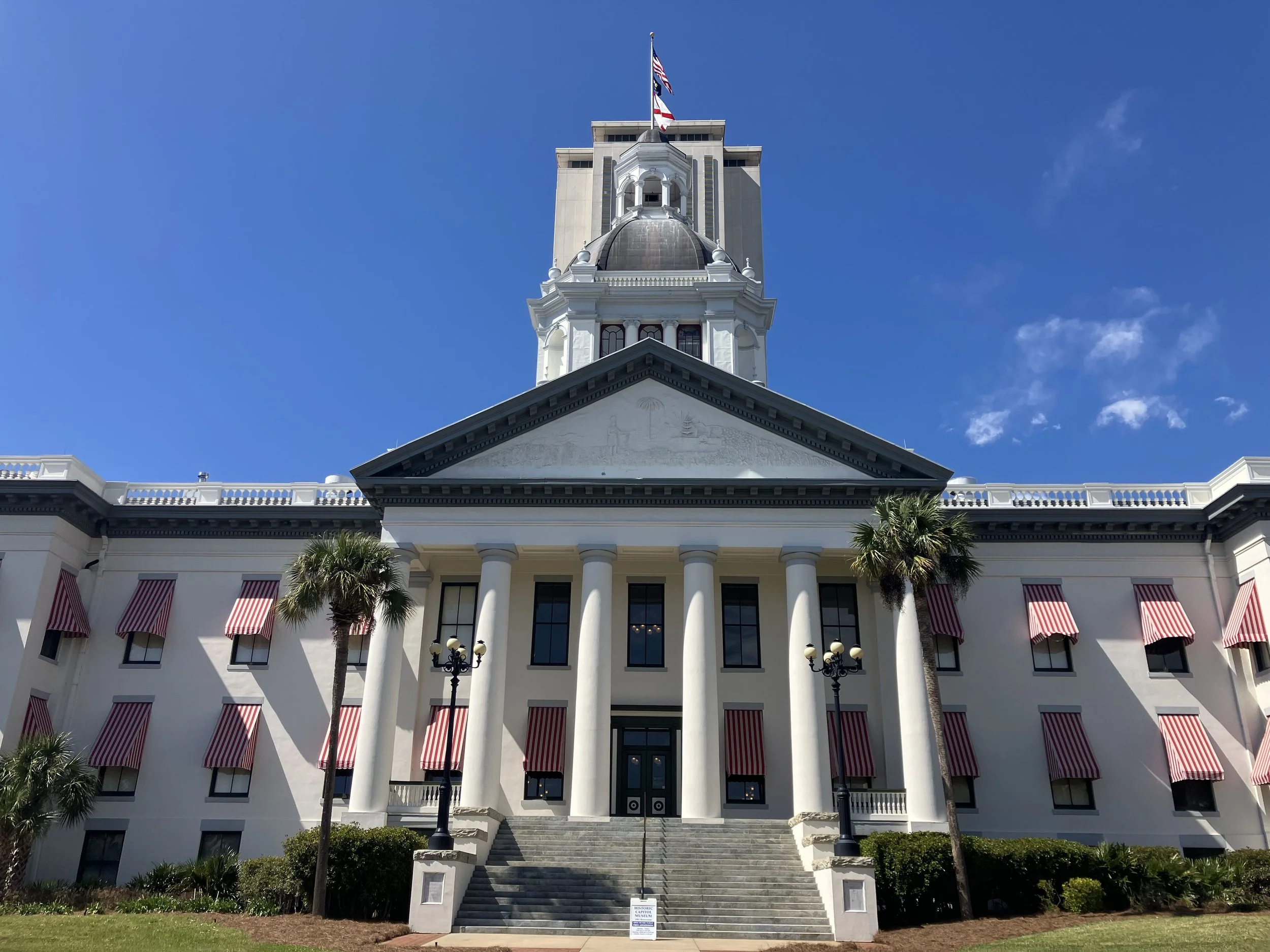
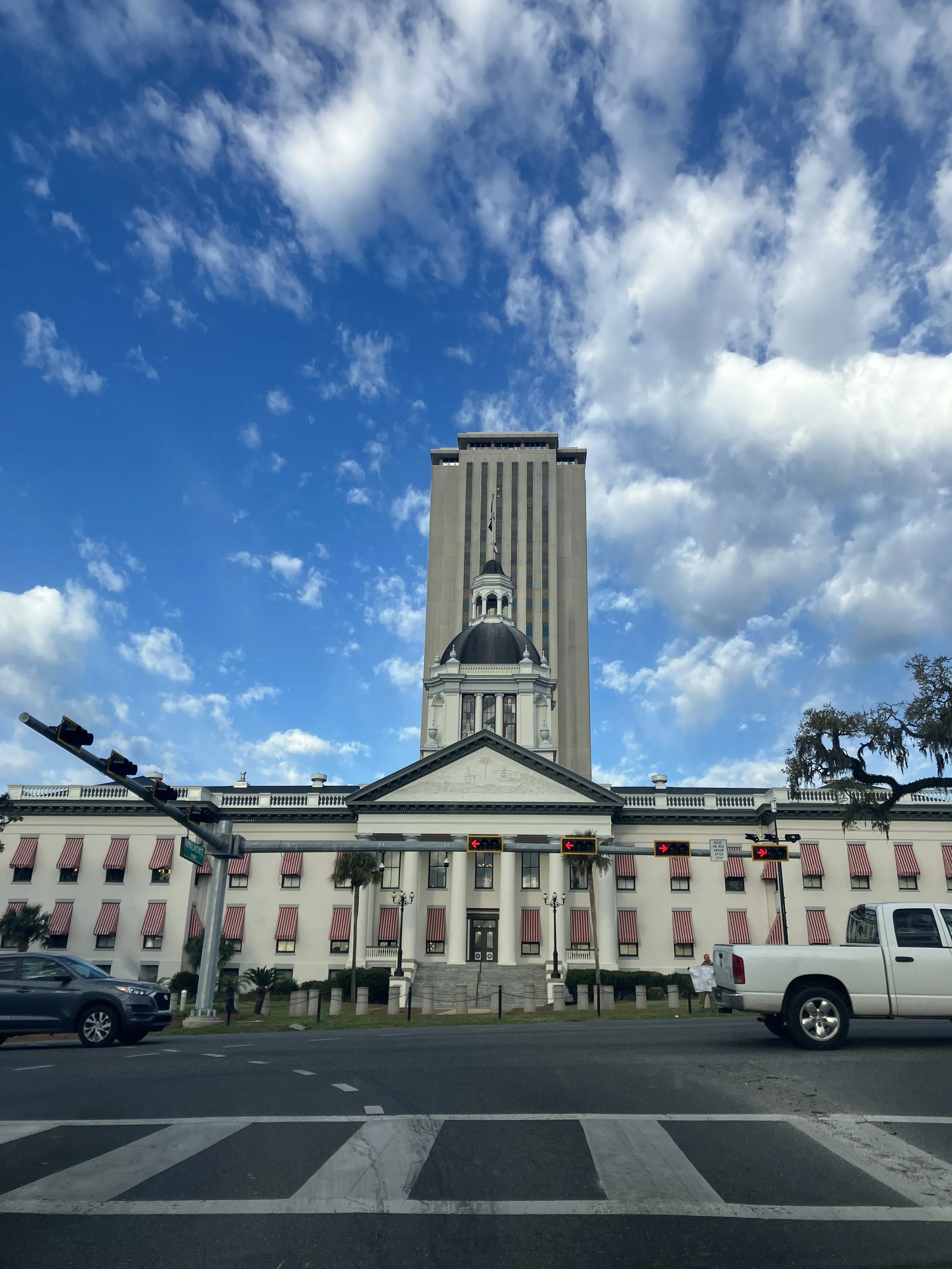
The Capitol Complex, with the Historic Capitol pictured in front of the modern one.
Earlier this year, I announced having started a seasonal contract that would run through the end of July, for legislative indexing. At the time of that post, I had only just started work and was becoming acquainted with the details of indexing laws, and how it differs from regular book indexing as well as database indexing. I have plenty of experience with both of those, but legislative indexing is a whole other ball game.
Fortunately, the identification of key concepts is a core principle that carries over from book and database indexing. The difference, however, lies in the way those concepts are reflected in the index.
The wording and structure of subheadings was probably the trickiest aspect of legal indexing but it was also the most satisfying, in that we could make very specific entries. In constructing the wording for index entries, we worked to make sure that the most salient information was located at the beginning of the line.
Sometimes, different aspects of a bill could be combined into one L2 (subheading), but other times it was necessary to create more than one L2 under an L1 (main heading) for the same bill — a practice that has no parallel in book indexing, to make sure that all the important information got captured appropriately. Once, I commented on the challenge of knowing when to combine or to keep separate the different aspects of a bill when working on the Laws of Florida (LOF) Index, to which my supervisor, Terrill, replied, “We’re often walking several tightropes: implicit vs. explicit, general vs. specific, together vs. separate, etc.”
This style of indexing went from being challenging to liberating, because the expectations of consolidation that exists in book indexing were basically nonexistent and all the important aspects of a bill could be captured in the index entries.
The wording and structure of subheadings was probably the trickiest aspect of legal indexing, but it was also the most satisfying in that we could make very specific entries…This is all working towards making the index as helpful as possible to its users, combining precision and accuracy with scannability.
Overview of the Indexing Process
To start, each indexer would claim a bill and its three corresponding work items for the LOF, Florida Statutes (FS), and Definitions indexes; create entries as appropriate; and then mark the indexing as complete in a work tracking spreadsheet. Another indexer would then claim those three work items for the First Review. If there were substantial changes, it would be sent back to the original indexer for a Second Review, and then the head indexer would perform a Final Review before committing the new index entries of each work item. In this way, the 2025 publications would slowly but surely be built.
Since I was working remotely with the rest of the team in the office, we communicated mainly via Microsoft Teams to resolve any questions or comments.
Once all indexing was completed and no new bills were left unindexed, we edited the whole index and made changes as needed. My contract ended before indexing the FS and Definitions was complete, but I was happy to be able to participate in the indexing and editing of the 2025 LOF Index from start to finish.
“We’re often walking several tightropes: implicit vs. explicit, general vs. specific, together vs. separate, etc.” — Terrill Schrock
Key Points of Indexing Laws
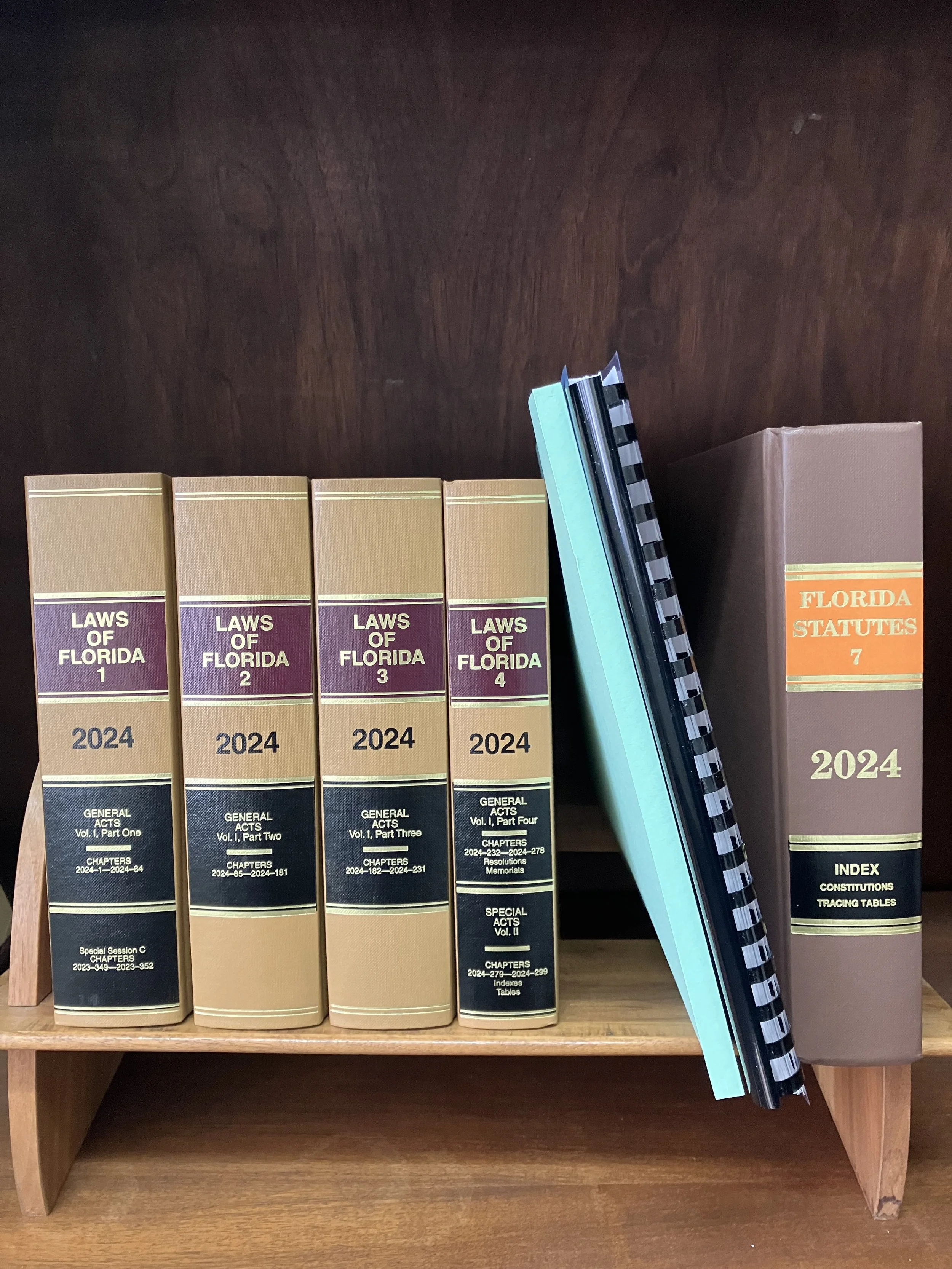
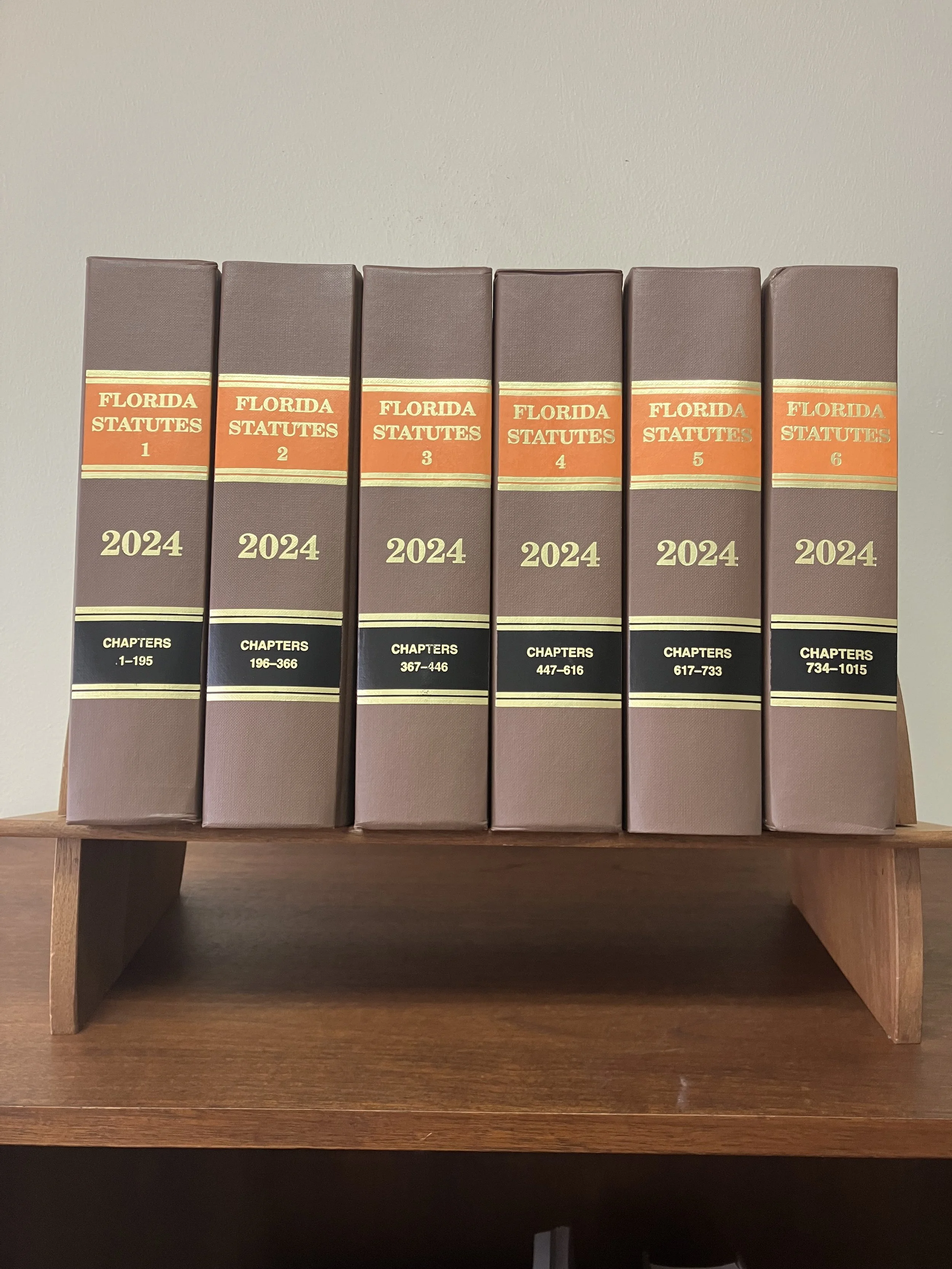
The Florida Statutes and the Laws of Florida are published both online and in print, and both are browsable and searchable via the Search & Browse website.
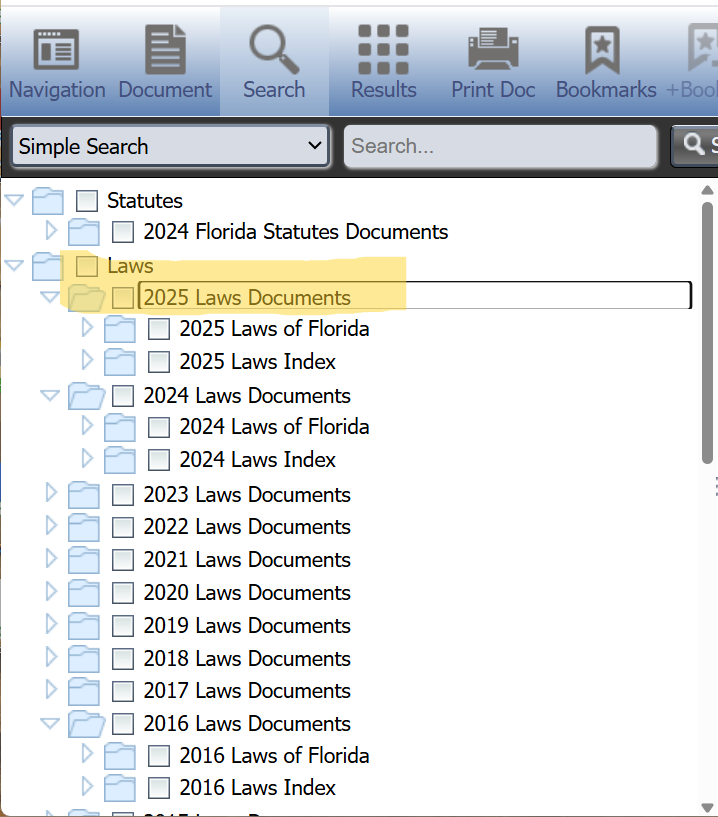
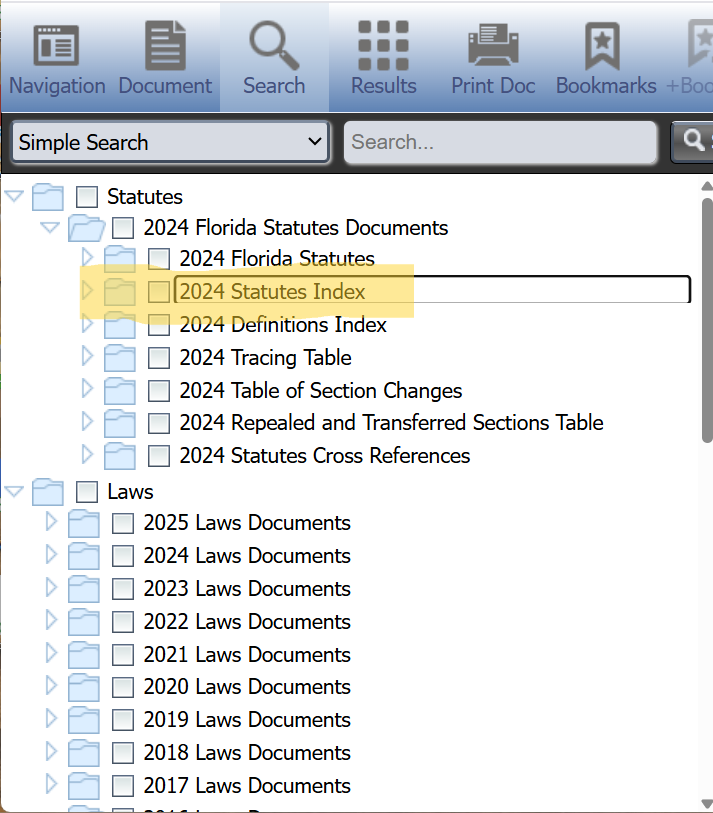
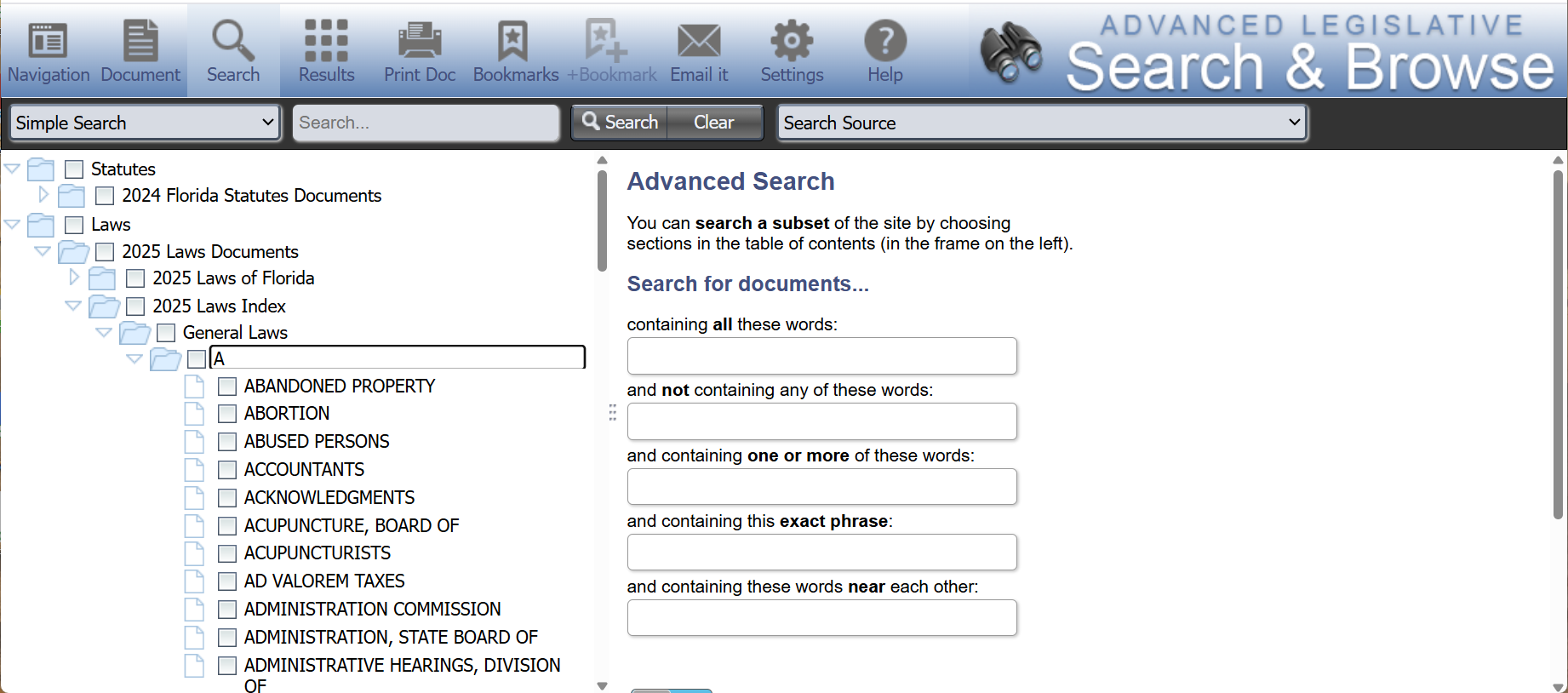
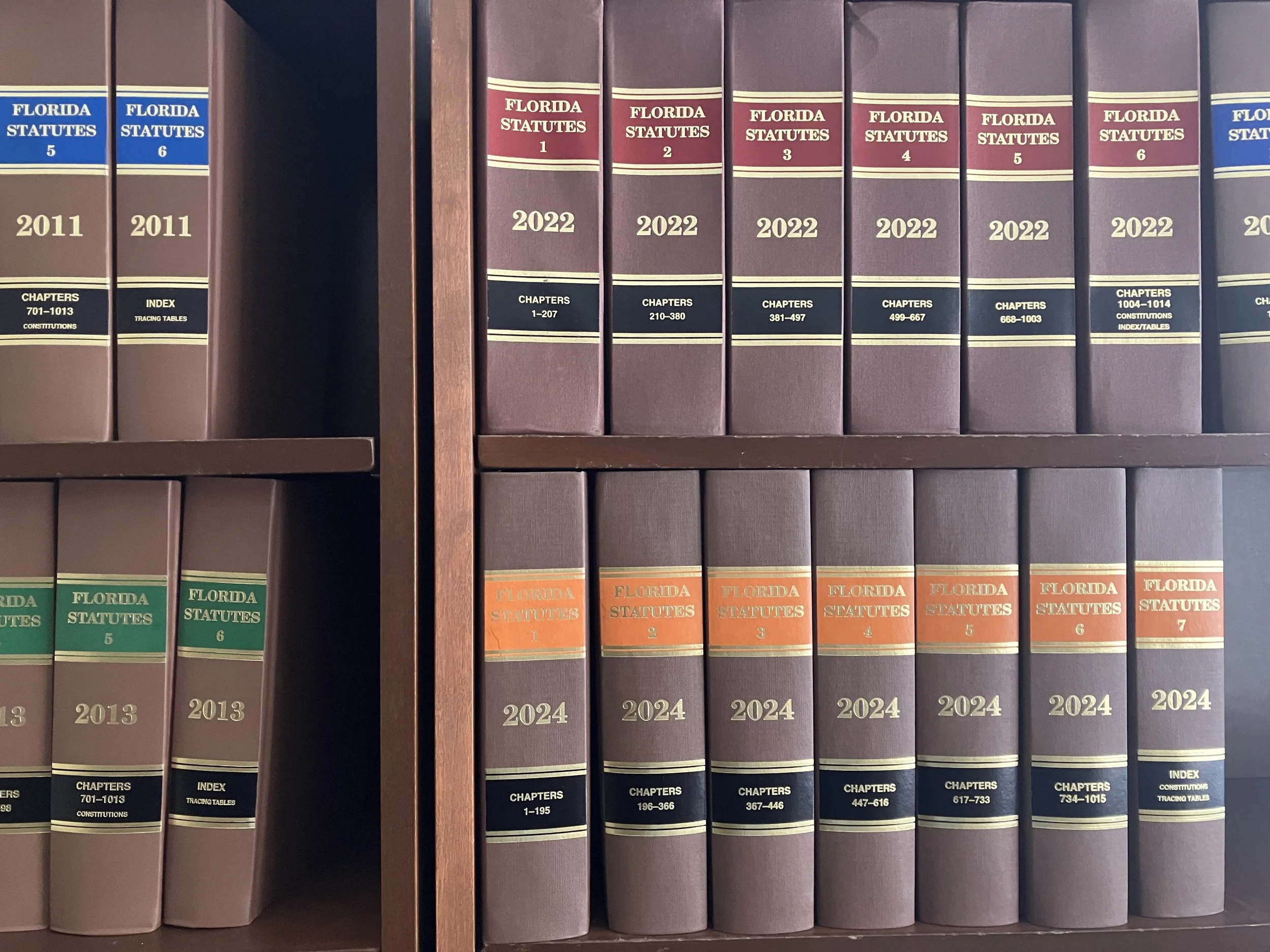
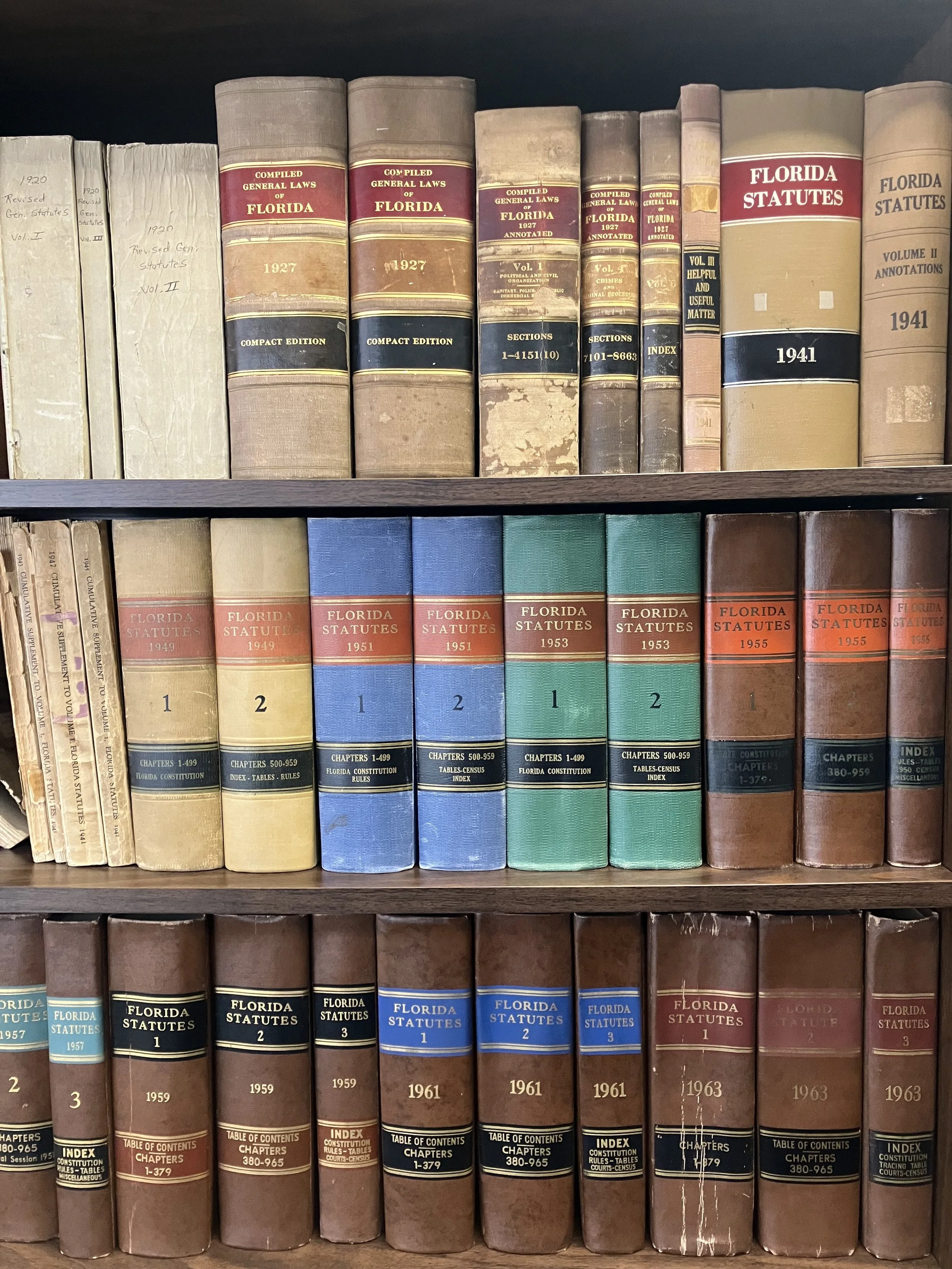
The Florida Statutes (FS) Index is a cumulative publication, so main headings and subheadings carry over from one year to the next, though subheadings may be changed as appropriate and may be broken down into sub-subheadings if there are too many locators (called cites by the legislative indexing team).
The Laws of Florida (LOF) Index is not cumulative — instead, it is constructed from scratch each year and its contents are based entirely on the new bills that have been passed in the current legislative session.
Main headings (called L1’s) are essentially a controlled vocabulary for both FS and LOF — the FS L1’s rarely get added to or changed, but the LOF L1’s are selected from a list of standardized headings to be published each year.
Notes on the Wording & Structure of Subheadings
Subheadings (L2’s, L3’s, etc.) allow more flexibility in wording and generally match the style and language of the laws being indexed.
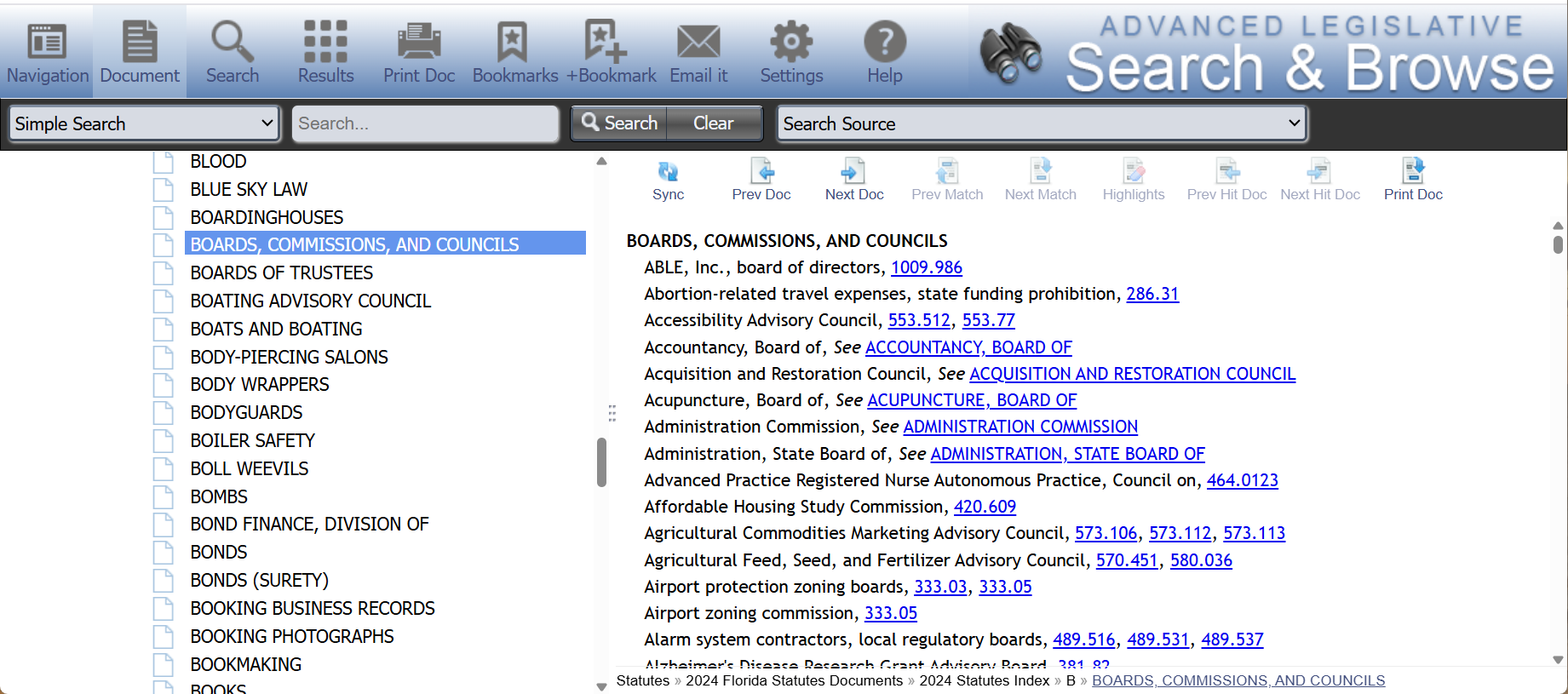
Subheading construction is somewhat rigid for FS since it’s a cumulative publication — the indexers are focused on integrating what’s new in a bill into the already large index. Cites are added to pre-existing subheadings when possible.
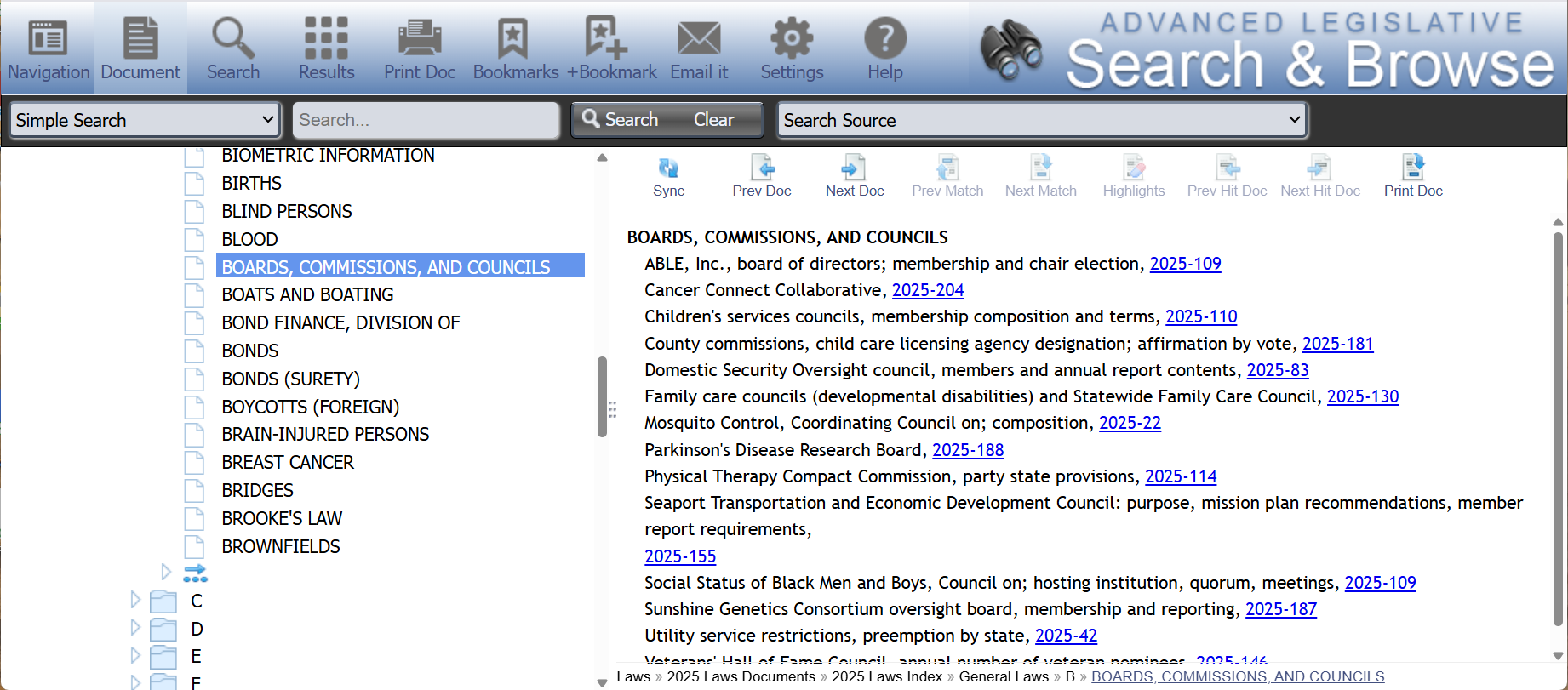
Subheading construction for LOF is tailored entirely to the new bill being indexed. It’s rarer to have multiple cites per L2 in LOF than it is in FS.
Subheadings can be several layers deep. In LOF entries are, most often, no deeper than L2 (subheadings) but in FS it’s not unusual to see L3’s (sub-subheadings) and not impossible, though comparatively rare, to see L4’s (sub-sub-subheadings) or L5’s. This is all working towards making the index as helpful as possible to its users — combining precision and accuracy with scannability.
See the examples below of LOF and FS indexes, respectively, , where I have highlighted L1’s in yellow, L2’s in blue, L3’s in green, and L4’s in pink:
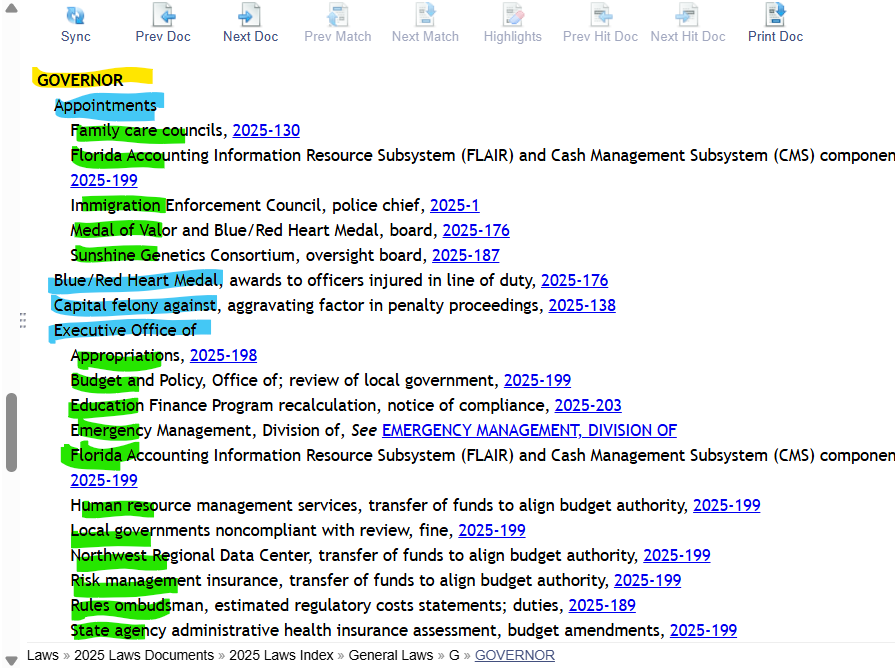
LOF Index: I have highlighted L1’s in yellow, L2’s in blue, and L3’s in green.
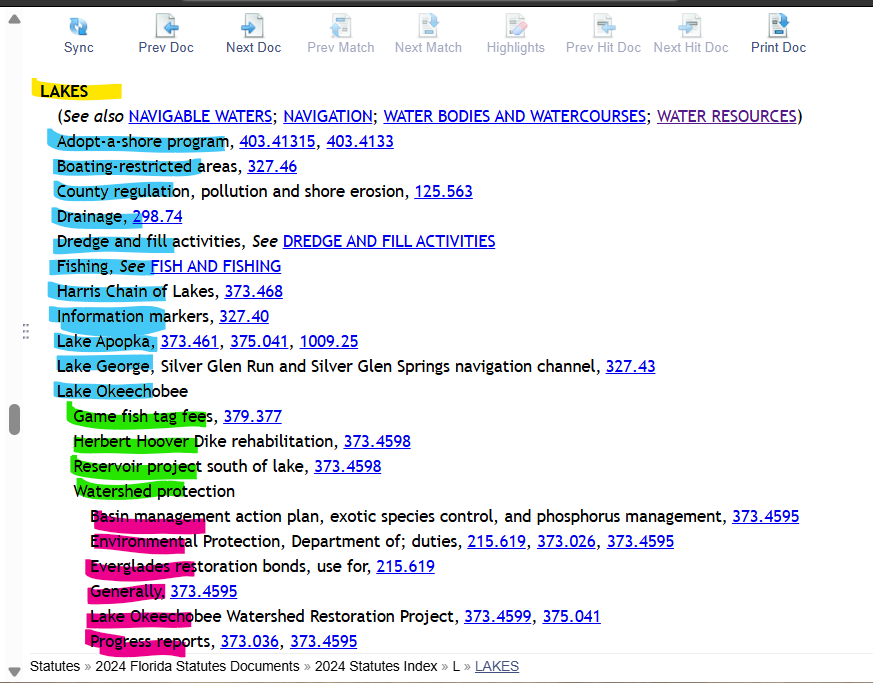
FS Index: I have highlighted L1’s in yellow, L2’s in blue, L3’s in green, and L4’s in pink.
A Note on Cross References
Another unique thing about legislative indexing, compared to book and database indexing, was the way cross-references are handled. For most of the books I have indexed, clients have preferred no cross references from subheadings, instead See references are located either at a main heading that has no entries/locators, or, in the case of See also references, they are listed as the “last subheading” in an entry.
Because of the delightful specificity required for legislative indexing, See also references are located first in LOF and FS indexes, under the L1; and See references from subheadings are found in the FS Index, as needed.
There are specific guidelines for the indexers to determine when a cross-reference is called for, but that would be a topic for a separate post.
Conclusion
The opportunity to work as part of this legislative indexing team was a pleasant and welcome surprise — I had taken a course in Library School on the fundamentals of government information, which covered the categorization, cataloguing, and reference of legal works, but that was the extent of my explicitly legal-information management knowledge before this year.
There was a definite learning curve for legislative indexing, and I am supremely grateful to the indexing team at OLS who had such good communication skills and patience as they trained me in a very niche field! It was definitely a rewarding experience for me, and I am happy to have been able to help my indexing colleagues at OLS with this project!
About the Legislative Analysts/Indexers
Terrill Schrock, featured in the February 2025 edition of ASI’s See Also newsletter, comes from a background in linguistics after working in Uganda on indigenous language development. He has been with OLS for three years, and likes the idea that the work he does is ‘context artistry’, crafting entries and structures at the delicate line where detail and big picture, analysis and synthesis — left brain and right brain, meet.
Jay Woodham comes from a varied background, performing deep research in both the for-profit and non-profit sectors. Some highlights include vetting investors for an industrial seed-oil startup, and managing both research and fact-checking teams for three books that made it on to the New York Times Bestseller List. A five-generation Floridian on both sides, he lives with his family in northeast Tallahassee.
Resources relating to Legislative Indexing
Cornell Law School: Legal Encyclopedia (aka my newest best friend)